.png)


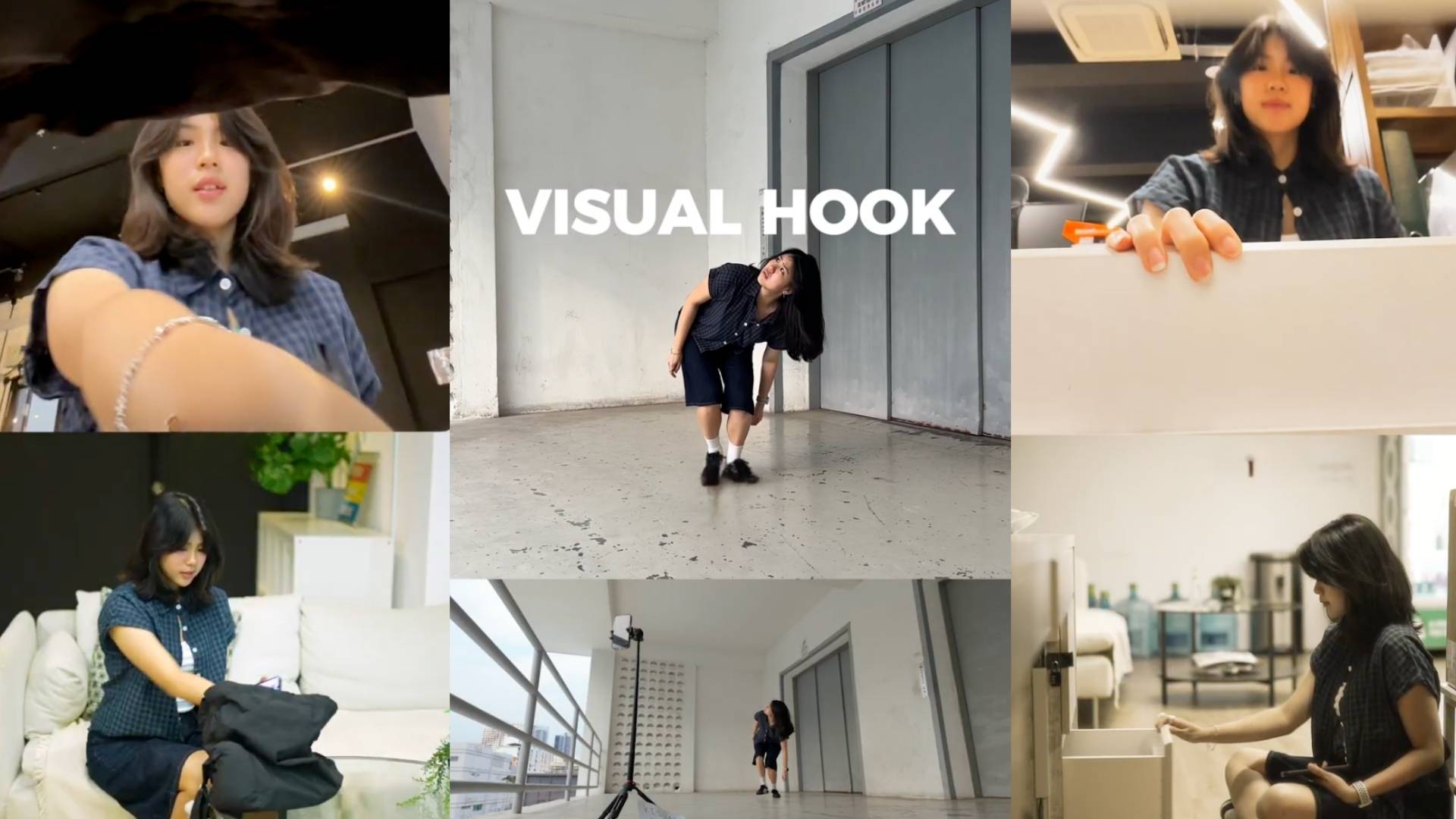
On social media platforms like TikTok and Instagram, getting from one video to the next is just a scroll away. Scroll through enough TikToks or Reels and the motion becomes a reflex, audience attention slowly fading into the steady rhythm of swipe, swipe, swipe.
A good visual hook is your chance to break that spell, but it’s a narrow window to hit. Viewers decide almost instantly whether to stay or move on. That’s why the first three seconds of a video matter so much. They need to signal “watch this” immediately, or the moment is gone.
Whether you're a brand launching a campaign, an event management agency promoting an upcoming event, or simply trying to stand out in a crowded feed as an animation studio, this is something you can’t afford to overlook. As a social media video production company, this is something we think about constantly. If those opening seconds don’t create curiosity, surprise, or some form of visual tension, the algorithm rarely gives the content a second chance. And in an endless feed, there’s no room for slow starts.
To earn attention today, you’re not competing with other brands. You’re competing with the user’s instinct to scroll. Understanding how visual hooks work is the first step to stopping that thumb.
Strong visual hooks are openings that tap into predictable patterns of human attention and perception to break the doomscrolling trance that audiences can get lulled into. Simply put, you need to give people something interesting to look at if you want them to notice you.
One of the strongest forces is pattern interruption. When a visual defies expectation, whether that’s through an unusual movement, framing, or action, the brain pauses to interpret the anomaly. That pause ideally gives your video enough time to get your point across.
Curiosity and incomplete information also play a major role. When an opening visual raises a question but doesn’t answer it immediately, the brain wants closure. That cognitive tension keeps viewers watching for a resolution.
Next, movement and contrast are particularly effective in short-form video. A sudden motion, a sharp change in scale, or high contrast elements naturally draw the eye, even without audio.
Finally, humans are wired to notice faces, eye contact, and body language. It’s not something our brains can just turn off, so triggering the instinct with a visible reaction, turn, or expression often performs better than abstract visuals because viewers instinctively try to read intent or emotion.
While novelty, clarity, and relevance all contribute, the most effective TikTok visual hooks or IG reels visual hooks typically layer several of these principles at once.
Top 12 Visual Hooks to Use for Your TikTok and IG Videos
What It Is
The video opens from inside a handbag or bag, with the camera positioned as if it’s an item stored within. The frame is partially obscured by fabric and darkness, but within the first one to two seconds, the subject reaches into the bag, rummages briefly, and pulls the camera out. The action feels tactile and close, as though the viewer themselves is being picked up.
Why It Works
The Bag Hook layers pattern interruption with physical interaction. Viewers don’t expect the camera to start from inside an enclosed space, so the unusual framing immediately disrupts scrolling behaviour. Then, as the bag opens, going from darkness to light introduces contrast and movement, naturally pulling the eye. There’s also an element of curiosity at play here, as the viewer doesn’t yet know where they are or why, and that incomplete information creates cognitive tension.
Example Use Case
Use this hook to introduce “what’s in my bag” concepts, product reveals, or to symbolise pulling out a key idea or solution.
What It Is
The camera starts inside a closed drawer, creating a dark, enclosed frame. When the video begins, the drawer slides open and light floods in, revealing the subject standing or leaning over the drawer. The camera remains stationary as the world moves toward it in an almost cinematic fashion.
Why It Works
The slide-in hook relies heavily on pattern interruption and contrast. Starting in near-total darkness immediately defies expectation, especially in feeds chock-full of flashy visuals. Then the movement of the drawer paired with curiosity of what lies outside it intrigues the viewer further. The slow reveal gives the brain just enough unanswered information to stay engaged.
Example Use Case
This hook works well for revealing tools, products, documents, or interesting behind the scenes information.
What It Is
The video opens inside of a fridge, the shot framed by shelves and groceries. Within the first second, the fridge door opens and the subject appears, reaching in to grab something near the camera. The action is entirely ordinary, but the perspective is rather out of the ordinary.
Why It Works
The fridge hook works because it blends familiarity with novelty. You open your fridge everyday, but seeing it from the fridge’s perspective breaks visual expectations. That contrast triggers a brief pause, which is quickly built upon by the door opening and creating strong movement and framing, with the subject’s face naturally becoming the focal point once they lean in.
Example Use Case
Use this hook to introduce daily habits, lifestyle products, or relatable pain points tied to routine decisions.
What It Is
The camera faces an open doorway at a low angle as the video begins. Then, the subject steps out of the room, towards the camera, briefly obstructing the shot with their legs before shutting the door and stepping away. The closed door is left as the only thing on camera, filling the frame.
Why It Works
Instead of revealing information, this hook does the opposite by removing it. Closing the door serves as a pattern interruption, it’s a sudden visual cutoff that leaves the viewer’s brain wanting resolution, while the deliberate body movement and proximity to the camera also activate our instinctive attention to human action.
Example Use Case
This hook is effective for exclusivity themes, setting up a reveal that comes after a hard cut, or even just as a title card placement.
What It Is
The subject sits facing the camera and raises their hand, making a pinch-to-zoom gesture anyone who’s used a touchscreen before is familiar with. The camera responds, appropriately, by zooming in, as though the viewer's screen is responding to the subject's actions.
Why It Works
This hook taps into learned digital behaviour. Anyone watching the video is familiar with the gesture, so when the camera responds as if it’s being controlled by the subject, it briefly breaks the viewer’s sense of normal screen interaction. The zoom itself introduces movement and scale change, both of which naturally draw attention.
Example Use Case
Use this hook to draw attention to facial expressions, product details, or key statements you want viewers to focus on immediately.
What It Is
The camera starts inside a closed box, such as a shoebox. Then, the lid is lifted, flooding the frame with light, and the subject starts removing items from the box before eventually grabbing and lifting the camera itself out of the box.
Why It Works
The obscured start presents you with an incomplete set of information, the viewer knows something’s about to be revealed but doesn’t know what. The opening of the lid introduces contrast and movement, while the act of removing items builds anticipation. The layered reveal keeps curiosity active, and the final moment where the camera itself is grabbed adds a physical, tactile element.
Example Use Case
Ideal for product launches and reveals, such as a brand revealing a new item or upcoming sale.
What It Is
The camera sits at the bottom of a laundry basket or container. The subject looks down into it, rummages around, and grabs an item close to the lens, briefly pulling it into frame.
Why It Works
The looking-in hook leverages its unusual viewpoint to interrupt visual expectations. Looking down into a basket or container is familiar, but seeing it from inside creates novelty. The movement and framing also ensure the viewer’s eye stays centred, even without dramatic action.
Example Use Case
Use this hook to introduce everyday problems, relatable routines, or products tied to household or personal use.
What It Is
The camera starts partially blocked by an object on a shelf. The subject pushes the obstruction aside, clearing the frame, before reaching in and grabbing the camera itself.
Why It Works
Obstructed views naturally create tension. When something blocks the frame, the brain expects it to be moved, and that expectation keeps viewers watching. The motion of pushing the object aside introduces movement and contrast, and can itself be spun as a symbolic act of “clearing the way” if that’s relevant to the subject of the video.
Example Use Case
Use this hook when positioning your message as something that provides clarity, and switch out the locating and item being pushed for additional relevance.
What It Is
The camera faces a closed elevator. As the doors open, the subject is revealed inside, while another person nearby turns to look.
Why It Works
Elevators naturally create anticipation. You know it’s going to open, so the closed doors signal that something is about to happen, and viewers instinctively wait for the reveal. The movement of the doors then reveals the subject. The additional human reaction of someone turning to look reinforces the fact that the subject is worth the viewers attention, even just subconsciously.
Example Use Case
Great for reveals or introductions since the reveal happens naturally as part of the environment.
What It Is
A graphic or visual element is placed mid-frame in post-production. The subject physically ducks under or moves around it, treating it like a real obstacle.
Why It Works
This hook disrupts visual logic by treating a digital element like it actually, physically exists in the space. That mismatch is a pattern interruption that forces the brain to pause and interpret what it’s seeing. The hook works because it blends novelty with a clear point of focus.
Example Use Case
Use this hook to visualise challenges, blockers, or problems your content aims to solve.
What It Is
The video opens already in motion, with the camera spinning or moving rapidly. It briefly lands on the subject, then spins again into a new scene.
Why It Works
Starting in motion immediately bypasses passive viewing with the quick movements and sensory stimulation. Briefly stopping on the subject creates a brief flash of recognition before the motion resumes, preventing the brain from settling too quickly. The rapid transitions keep curiosity alive and viewers stay to understand where the movement will land next.
Example Use Case
Ideal for transitions, transformations, or showcasing multiple environments quickly. Outfits of the week videos or room makeovers in particular suit this format.
What It Is
The subject waves at the camera, then the view zooms out to reveal the opening shot is actually a video playing on a phone held by the subject.
Why It Works
The video inception hook plays directly with perception and expectation. Viewers initially believe they’re watching a standard talking-head video, but almost immediately, the familiar pattern is broken and the zoom-out reveal reframes the scene as a video within a video. The sudden contextual shift triggers surprise and curiosity, and the subject’s wave and eye contact establish a human connection early, ensuring attention is anchored before the big reveal.
Example Use Case
Use this hook to comment on content creation, storytelling, or meta perspectives on social media.
The point of using TikTok visual hooks or IG Reels visual hooks isn’t to game the algorithm. At the end of the day, it’s people who are watching your videos. Visual hooks are simply a way to respect how people actually consume content. On platforms ruled by rapid scrolling and dwindling attention spans, the opening seconds of your video determine whether your message ever gets heard.
The most effective creators test a range of visual hooks, refine what works, and adapt them to their brand, platform, and audience. Not every hook fits every scenario, and small adjustments can be the difference between being skipped and being watched.
If you’re serious about improving short-form performance, working with a social media video production company like Big 3 Media can help you design hooks that align with your goals, whether you’re navigating platform differences explained in TikTok vs Instagram, or understanding how these platforms evolved through TikTok's history and the history of Instagram.
Remember, attention is a race against the scroll, and you only have three seconds to beat it.
Sign up to receive tips and tricks on how to make videos that make people take action.


We'd love to know more about how we can assist you with your project. Click on the contact us button now and let's get started! Alternatively, you can also email us at info@big3.sg.


